
Handwashing, mask-wearing, sanitizing, and disinfecting have become routine throughout the COVID-19 pandemic. Even for the less zealous cleaners among us, our shared public areas like restaurants and public transit undergo much more rigorous cleaning practices than ever before. Early in the pandemic, before we knew that COVID-19 is primarily transmitted through respiratory droplets and aerosol particles, our hygiene practices felt necessary and potentially even comforting as we tried to protect ourselves against the unknown. At one time, public health experts advised us to consider disinfecting our groceries and our delivered packages. This morning, I picked up a freshly sanitized pen from the “clean” bin to sign my children into school. I deposited it into the “used” bin to be re-sanitized. This pandemic created widespread hyper-vigilant hygiene practices, many of which we continue to perform inside our homes. But what are the consequences of keeping things “too clean”? Could we be doing ourselves more harm than good?
“Excessive hygiene practices… may weaken those [human microbiome] communities going forward in ways that promote sickness and imperil our immune systems.”
Markham Heid “Can We Learn To Live With Germs Again?” New York Times, 23 April 2021
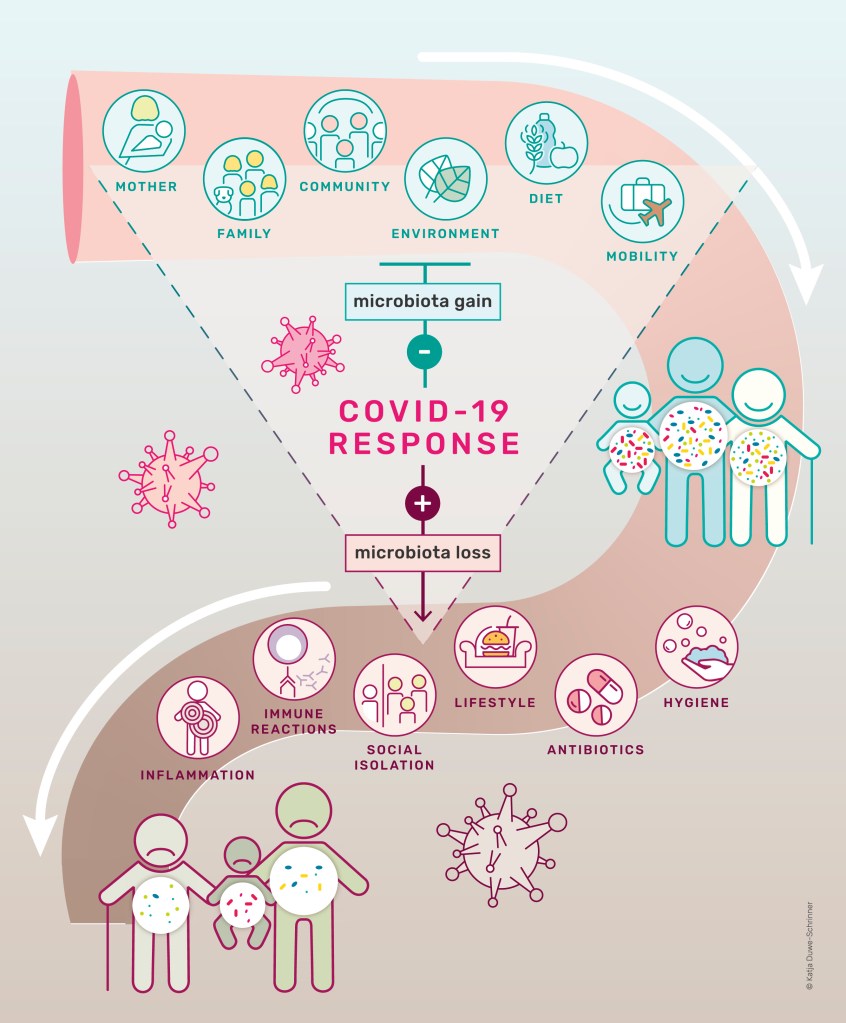
Health and science journalist, Markham Heid, considered this question in his New York Times op-ed that investigated the connection between our increased hygienic standards and our microbiome. Heid writes that some health experts worry that “excessive hygiene practices, inappropriate antibiotic use, and lifestyle changes such as distancing may weaken those [human microbiome] communities going forward in ways that promote sickness and imperil our immune systems.” He cites a well-known paper from the Proceedings of the National Academy of Sciences (PNAS) that also targets social distancing and extensive hygiene as a potential source of dysbiosis in the human microbiome. Heid spoke with one of the primary authors on that paper, Dr. Brett Finlay, who believes that “hygiene zealotry” may not only remove potentially helpful microorganisms but also potentially drive them into extinction.
In the paper, Dr. Finlay and his co-authors write that as people continue regularly disinfecting their work and home spaces, they eliminate microorganisms from their environment, which can impact both their individual microbiome and the diversity of their community’s collective microbiome. For example, in a study of hospital disinfectants, researchers found that the bacteria populations on surfaces in hospital rooms were significantly impacted by the type of disinfectant product used. Especially once the most common bleach-based disinfectants sold out of stores, people began using more varied products containing 70% Isopropyl alcohol solutions and Quaternary Ammonium Compounds (Quats). Some even began concocting their own cleaning products at home. The concern outlined by Dr. Finlay and his co-authors is impaired immune function and chronic inflammation. As we continue to study the widespread health effects of our microbiome, we become more aware of its importance. Their paper uses the example of decreased allergies in children of rural communities with regular exposure to the outdoors and animals. They compare this to the increase in allergies and autoimmune diseases in children who were given antibiotics. While they stress that much more research is needed to outline the precise health consequences, their warning is clear.
So, what can we do about it? First, consider saving your heavy-duty disinfectants for when someone at home has been sick. Soap and water should do the trick for most regular household cleaning, even as we continue to coexist with Covid-19. Second, wash your hands regularly and wear a mask when you don’t feel well. This can help prevent the spread of the disease-causing microorganisms we want to keep our homes free of. Your microbiome (and your local healthcare workers!) will thank you for it.
 What's That?