

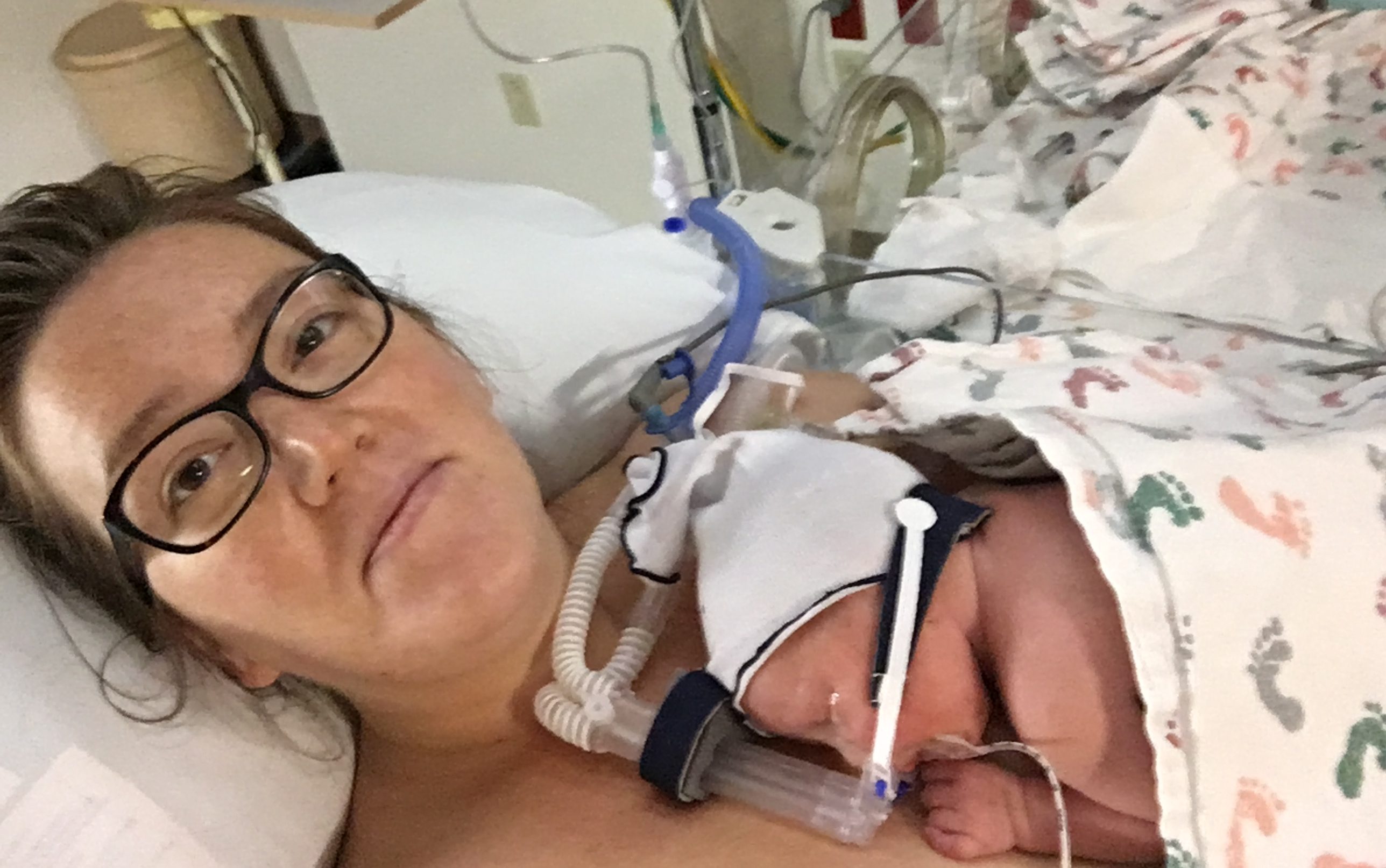
The first moment I held my son, something changed in me. The NICU nurse carefully placed my premature baby on my chest, careful not to tug on the multiple tubes and sensors attached. I felt a combination of deep love and intense fear that I’ve slowly learned to live with over the five and a half years since that day. I’ve carefully considered and questioned every decision I’ve made with both of my children. Vaccination is no exception. Some parents fear childhood vaccination, and others outright refuse it. Where does this hesitancy come from? And, most importantly, should we vaccinate our children?
Vaccines and Autism
In 1998, UK physician Andrew Wakefield and a small group of researchers wrote an early report in The Lancet. The report outlined the results of a study on intestinal and behavioral disorders in twelve children. A group of concerned parents brought their children to Wakefield because they believed that the children’s symptoms began after receiving the vaccine for measles, mumps, and rubella (MMR). The children had developed behaviors such as loss of communication, self-injury, and lack of eye contact. The children all had stomach and bowel issues. Their parents couldn’t pinpoint when the symptoms began because many of the children couldn’t communicate.
Wakefield and his researchers admitted eleven boys and one girl, aged three to ten years old, to the Royal Free Hospital in London for one week. Wakefield’s report describes testing the children with an in-depth review of their medical histories, thorough digestive and behavioral assessments, and invasive procedures like colonoscopies, MRIs, and lumbar punctures. Wakefield diagnosed nine children with autism. He diagnosed one child with childhood psychosis and two with a viral brain infection. Wakefield wrote that his team “did not prove an association between measles, mumps, and rubella vaccine and the [behavioral] syndrome described.” However, he urged future studies to consider an association between the vaccine and autism.
Four years later, investigative reporter Brian Deer accused Wakefield of financially benefiting from his research, detailed in the British Medical Journal. Deer claims that Wakefield applied for patents for alternative measles vaccines and potential cures for both inflammatory bowel disease and autism nine months before announcing the results of his research. A 2008 article from the British Medical Journal outlines subsequent controversy surrounding Wakefield’s study. The Lancet denounced Wakefield and his study when the public learned that 10 out of the 12 participants were suing vaccine manufacturers with help from the Legal Services Commission. The commission paid Wakefield nearly $860,000 to study the safety of the MMR vaccine. Wakefield did not disclose these payments in his report.
The UK General Medical Council investigated Wakefield’s testing methods, mainly using invasive procedures on children. Wakefield did not deny using invasive testing. Instead, he argued that he only needed approval from the ethics board for research and that the testing done in this study was for clinical purposes. The Lancet formally retracted the entire study in 2010 once the GMC concluded that the report contained false findings, conflict of interest, and unethical testing.
Just how significant was the impact of Wakefield’s study? One group of researchers published in the Public Library of Science credits the study as “the pivotal moment” in modern-day vaccine hesitancy, sharing that one in three Americans still believe in the link between vaccination and autism despite the lack of evidence. However, our misgivings are no longer limited to childhood vaccinations. We saw this clearly during the COVID-19 pandemic.
The COVID Vaccines
The COVID-19 pandemic allowed us to watch the development of new vaccines in real time. Many of us learned about the FDA and the process of approving new pharmaceuticals for the first time. Scientific research and development came to the forefront of popular culture in a way that wasn’t possible before social media. This opened the door for a group of online personas eventually dubbed the “Disinformation Dozen.” In a 2022 analysis of Covid-19 misinformation online, researchers investigate the twelve individuals and how they created an audience for themselves.

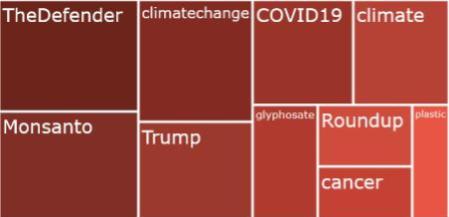
Among the twelve are osteopaths Joseph Mercola, Rashid Buttar, and Sherri Tenpenny; gynecologist Christiane Northrup; alternative medicine activists Erin Elizabeth, Kelly Brogan, Sayer Ji, Ty, and Charlene Bollinger; environmental lawyer Robert Kennedy Jr.; chiropractor Ben Tapper; and anti-vaccine activists Kevin Jenkins and Rizza Islam. The report finds these twelve individuals “responsible for 65% of Covid-19 misinformation circulating on social media.” The Disinformation Dozen primarily produced and shared their own content. Their most frequent hashtags, shown in the infographic below, promoted global conspiracy and discredited well-established health organizations. They promoted untested “cures” and “hacks” to a vulnerable population.
YouTube was their primary medium for spreading misinformation. Their ideas and claims were circulated through other sharing platforms like Twitter and Facebook. At the time of the analysis, YouTube removed 45% of the videos shared from the Disinformation Dozen due to false claims, misinformation, and other violations of YouTube’s community guidelines.
The American Medical Association released a strong statement denouncing the Disinformation Dozen and the general practice of spreading false information for personal gain. The AMA charged this group with promoting “unproved COVID-19 treatments, false claims of vaccine side effects, and public health guidance that is not evidence-based.” The group’s plan of action for addressing this problem in the future includes:
- Adjusting social media algorithms to promote evidence-based sources.
- Encouraging fast fact-checking.
- Identifying how health professionals may benefit from misinformation and removing those sources of income.
Vaccine Misinformation
Vaccination horror stories include everything from allergic reactions to government microchips. The American Academy of Allergy, Asthma, and Immunology published an online resource to help patients separate fact from fiction. One common anti-vaccination fear is the alleged toxicity of vaccine ingredients. The AAAAI addresses the most often identified components, mercury, formaldehyde, and aluminum. The group shares multiple daily exposures to these chemicals that greatly exceed the amount contained in a vaccine. For example, milk and seafood contain mercury in much more significant quantities than multi-dose vaccines. In addition, many critics of the COVID-19 vaccine feared that vaccine manufacturers failed to thoroughly test the vaccines before administering them to humans. The AAAAI outlines the process of testing the safety and effectiveness of any vaccine. Researchers first test the vaccines on tissues and animals, monitoring for allergic reactions or harmful effects. Next, researchers give the vaccine to a small group of human volunteers and observe how well the vaccine prevents disease. All side effects from this phase are well documented before moving to the next phase. In the third phase, thousands of volunteers receive the vaccine, again assessed for effectiveness and safety. Only then is the vaccine made available to the larger public.

John Hopkins Medicine published a similar article on other prevalent vaccine myths. The authors cite social media for spreading the idea that the COVID-19 vaccine would affect fertility in patients that can become pregnant. The claim relied on a misinterpretation of COVID-19’s protein spikes. The source of this misinformation inaccurately compared the spikes on the outside of the COVID-19 virus to an unrelated spike seen in the development of a fetus. During the testing for the Pfizer vaccine, the single documented miscarriage occurred in a volunteer who received the placebo, not the actual vaccine. Some of the expected side effects for most vaccinations include headache, muscle aches, and fever, typical signs that the vaccine activated the body’s immune system. The vaccine symptoms are significantly milder than the diseases they seek to prevent. The US Department of Health and Human Services maintains the Vaccine Adverse Event Report System (VAERS) that continually accepts reports of harmful side effects from patients and healthcare providers. Vaccination is not something that health organizations and healthcare providers take lightly. There are strict and thorough protocols for proving the safety and effectiveness of any drug or vaccine before it ever reaches a patient.

So, What?
The World Health Organization, Centers for Disease Control and Prevention, European Center For Disease Prevention and Control, and United Nations Children’s Fund (UNICEF) recommend childhood vaccination schedules. Vaccines work. Vaccines eliminated smallpox and had nearly ended polio and measles before vaccine hesitancy allowed these diseases to return to infecting humans. Being a parent is terrifying. We all want to do what is best for our children. We may have different philosophies on introducing solid foods and restricting screen time. I assure you that we need not disagree on vaccines. But don’t just take my word for it! Challenge yourself to find studies that are reviewed and approved by multiple scientists. If you are skeptical of a scientific organization, look at similar organizations in different countries and see if the information matches. More likely, a charismatic con artist is fabricating information for profit. And, most importantly, vaccinate your children.
 What's That?