

Ah, my old friend, the microbiome. My inbox is full of buzzy articles claiming to have found the secret to health and longevity by unlocking the mysteries of the gut microbiome. (If you need a refresher on the microbiome, I’ve got one.) Age, family history, environment, diet, and lifestyle all dictate the tiny organisms living in our gut. This week, I’m looking at the current research on what kinds of food impact our gut microbiome. This is not an “Eat This, Not That” article. Instead, I aim to identify foods we can add to our daily meals that boost our gut microbiome health.
Experts talking about microbiome health usually refer to diversity or the number of different kinds of microorganisms living together inside our gut. Last month, digestive specialists in Rome, Italy, investigated this relationship between food and gut microbiome diversity. Over the first few years of life, our microbiomes become more stable and diverse as we interact with the world. However, people with autoimmune and metabolic disorders tend to have less diverse microbiomes. The Italian study references a clinical trial that successfully treated patients with ulcerative colitis with fecal microbiota transplants and diet changes. These results, and many like them, strongly suggest that changes to our diet could improve our gut microbiome and overall health.
Fiber
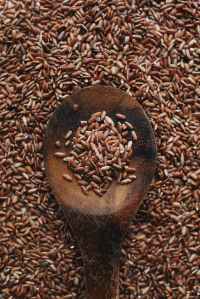
In American grocery stores, fiber is a commonly-listed supplement and cereal additive. Fiber is a type of carbohydrate that our bodies can’t digest. Our gut bacteria, however, can ferment fiber and use it as a source of energy. In Rome, scientists look at cereal, garlic, onions, artichokes, asparagus, bananas, chicory root, and human breast milk as reliable sources of “microbiota-accessible carbohydrates,” MACs for short. MACs are the sources of fiber that our gut bacteria can use. They cite a 2022 Nutritional Review (supported by General Mills) stating that MACs from these foods promote the growth of known healthy gut bacteria like Lactobacillus. They argue that fiber can act as a prebiotic, promoting health benefits, including increased insulin sensitivity and improved gut barrier function. For the sake of transparency, General Mills profits from multiple types of high-fiber wheat cereal.
In 2021, researchers from the Stanford School of Medicine also focused on fiber. Participants in the Stanford study increased their MACs by adding more fruits, vegetables, legumes, grains, nuts, and seeds to their daily meals. Over six weeks, researchers found an increase in microbial proteins in the participants’ feces. The gut bacteria produced more proteins because they used fiber to grow. However, there was no significant change in the number of different types of bacteria. The Stanford researchers think the study may not have been long enough for the gut bacteria to become more diverse. They also believe that the highly industrialized environment may have impacted their results. High levels of sanitization limit our exposure to new microorganisms. Microorganisms can’t simply appear within our bodies; they join our microbiome through direct and indirect contact. All three studies promote fiber as an essential part of daily nutrition but suggest adding other foods to improve gut microbiome health.

Fermented Food
The Stanford study observed more significant results in the group that ate fermented foods. Participants increased their consumption of “a variety of fermented foods, including yogurt, kefir, fermented cottage cheese, kombucha, vegetable brine drinks, and fermented vegetables, such as kimchi.” As a result, their microbiome diversity increased significantly over the six weeks. The increase seemed most strongly associated with servings of yogurt and fermented vegetable juices. These findings are consistent with a 2022 study out of Canada. Canadian researchers focused on how our gut bacteria process different types of food and what the bacterial byproducts can do within our bodies. They found that the bacteria that used fermented foods for energy produced fatty acids that protected the digestive system from pathogens and inflammation.

Protein
Our bodies need amino acids to function. Proteins are simply a chain of amino acids bundled up into different shapes. We can eat protein from animal sources like meat and dairy and plant sources like lentils and beans. In Rome, researchers found that animal proteins increased the gut bacteria that tend to be associated with heart disease and inflammation. The researchers in Canada focused on the byproducts of the gut bacteria that use meat and dairy for energy. One notable byproduct, hydrogen sulfide, can destroy the mucus lining the intestines, causing gastrointestinal issues and inflammation. Both studies found that plant-based protein sources increased the number of “good” bacteria, including Lactobacillus. They recommend increasing daily plant-based proteins like lentils, beans, chickpeas, peas, quinoa, spinach, and tofu.
Fat
In my lifetime, pop and fad diets have demonized and revered fats. So it makes sense that our feelings about fat are all over the map. Fats come naturally from different types of food, including fish, oils, seeds, and nuts. Fats can also come from manufactured sources like margarine, fried food, and non-dairy creamer. In Rome, scientists recommend foods high in mono- and poly-unsaturated fatty acids for increasing gut microbiome diversity. The Canadian study confirms that unsaturated fats are more beneficial to gut microbiome health than saturated fats, which can trigger bile acid production and the overgrowth of pathogenic microorganisms in the gut. Some reliable sources of unsaturated fats are nuts (cashews, almonds, and even peanuts), seeds (sunflower, pumpkin, sesame, flax), olives, avocados, and fish (tuna, salmon).

So, What?
First, I want to say outright that we are not talking about weight or weight loss. I will never recommend restrictive diets in any form, as weight loss studies prove time and time again that long-term weight loss is not sustainable for a vast majority of people who attempt it. Both overweight and underweight people can develop metabolic disorders and loss of gut microbe diversity.
Second, at an individual level, these recommendations may not be helpful for you. A review out of the Netherlands acknowledges our gut microbiome’s significant role in our overall health. The group investigated how well people respond to dietary interventions like those described here. Across multiple studies, they found diverse microbiomes are more stable and less reactive to diet changes. In one study, overweight men with healthy gut microbiomes benefitted significantly less from diet changes than others with less diverse microbes. In another, diverse microbes made participants resistant to weight loss. Researchers even found that the characteristics of gut microbiomes could predict how well participants would process the glucose in different types of bread.
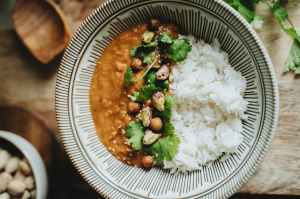
There is no one-size-fits-all magic pill for a healthy gut microbiome. Our culture, location, socioeconomics, food access, and preferences influence our diets. If adding more beans or yogurt to your daily diet sounds feasible and appealing, research shows it could improve your gut health. If you like whole wheat toast or cereal with extra fiber (that includes Frosted Mini-Wheats!), go for it. For now, I’ll add a bit more yogurt to morning smoothies and order daal the next time I go to my favorite Indian restaurant.
 What's That?